Showing posts with label unit5. Show all posts

Thursday, 30 June 2016

Final essay (2441)

Feminism in art 1960s and onwards

The Feminist art movement started in the late 1960s.Before the movement the majority of female artists were denied exhibitions due to their gender, this in turn helped spark the movement and drived many artist to try change what could be put in to gallery’s like The Tate modern and The Satchi gallery. These feminist artists sought to fight for equality and equal rights of women. Ways of doing this included using art, Intervening in the art world, as well as using social interactions, Performances and videos to present a message about equality that women deserved and also helped create places for women in art that had not been there before. This helped pave a way for Identity art and also activist art in the 1980s and so on.

In this essay I am going to write about some of the artists that were in this movement (post past and present).I feel that in order to help shape the future we must take note of what helped shape the world of female artist in the past and use this to help us make the world a little more equal.

Carolee Schneeman

Carolee schneeman was an American visual artist known for her pieces on the human body, Sexually and gender. The work she looked into was mainly characterized by visual traditions, Taboos, and the body of the individual in the relationship to social bodies.
Her friends described her as ‘A mad Pantheist’ which is the belief that all of reality is the same as divinity. This was due to her relationship and respect for nature. Schneemans earliest inspirations and connections between art and sexuality were her drawings from ages four and five, which she drew on her father prescription tablets that were from his work.
Her family was generally supportive of her naturalness and freeness with her body (her father more because of the fact he was a rural physician who would deal with the human body in various states of health.
She has since been labeled as a feminist icon but she also says it can reach out to make artists as well. Her work as a hole revolves around the freedom of sexuality and liberation, unlike other artists who referred to the victimization and repression of women. Carolee wrote in her book ‘She was a great painter’.

My thoughts on the Carolee work/The Interior scrolls
Her most notable art work ‘Interior scrolls’ was a performance at the Women here and now, in east Hampton, in which Carolee entered the room covered in sheets with nothing but a apron beneath. She then discarded the robe in the Centre of the space, climbed onto the table where she outlined her body in mud and struck “action poses” as if it were a life drawing class. She then read from her book ‘ she was a good painter’ and then slowly pulled a paper scroll from her vagina and read from it. She spoke about how she thought of the vagina in many ways  ‘Physically conceptually, as a sculptural form, an architectural reference, the source of sacred knowledge, ecstasy, birth passage, and transformation.


Valie Export

Her work includes video installations, body performances, expanded cinema , computer animations , photography , sculptures and publications covering contemory arts.
Valie related her self within the Viennese art movement. In that time Austrians thoughts towards Feminism was that of a Nazi propaganda .She subjected her body to pain and danger in actions that were designed to bring forward the growing complacency and conform of positive Austrian culture.
She did Guerrilla Gurrls performances have got her an iconic stature in the Feminist art world of today.

One of her performances (named Tap and touch) In which she wore a tiny ‘moving theatre’ around her naked body, this was so her body could not be seen but could be touched by anyone who was reaching in through the curtains (or the front part of the theatre as it was known).She then went into the streets and invited men, women, and children to come and look behind the curtains, all the while having direct eye contact , this in turn made the viewer feel uncomftable and gave them a sense of guilt. And gave the situation a sense of realness (as if they were doing something they shouldn’t do).
Although her work was ground breaking in many ways and unique for its time the media still responded to her work in pure fear and panic, even to the point where one News paper called her a “Witch”. Another instance was that, at one point, Valie claimed that “there was a massive campaign against her in Austria ”
She then went on to say “I found it to be truly fascinating “.

Another one of her iconic performances was ‘Action pants: Genital panic” made in 1968.In this exerbition she entered a cinema wearing leather crotch less pants that had had a triangular shape cut out and walked around the audience (and between rows) with her vagina exposed at face level. This In turn would force the viewer to once again be confronted with genitalia and would force emotions being positive or negative thus earing the last part of the title ‘Genital panic’. It also challenged the typical image of women in historical representation which cinema had always made women out to be passive objects denied agency.
In a interview done by Ruth Askey in 1979 Valie described her exhibition as being done in a pornographic theatre. Valie denied claims that (much like the poster would have suggested) she carried a gun and held it to people in the theatres heads till they all got up and left. This has never been clarified.

After the exhibition there was a set of six identical posters realize. Each poster had valie export sat on a chair wearing the crotch less pants she had worn previously only in these she holds a gun at chest level in which she is apparently turned in readiness to turn the gun on the viewer in which she gazes at. Her hair appears to be up in a wild mop above her head, which emphasizes the strangeness of the image.

Later on Valie went on to talk about her work saying: “I didn’t want to perform in a gallery or a museum, as they were too conservative for me, and would only give conventional responses to my experimental works. It was important for me to present my works to the public in the public space, and not within an art-conservative space, but in the by then so-called underground. When I was performing my actions in public, on the streets, in the urban space, new and different forms of reception developed. In the streets I provoked new explanations. I wanted to be provocative, to provoke, but also aggression was part of my intention. I wanted to provoke, because I sought to change the people’s way of seeing and thinking .If I hadn’t been provocative, I couldn’t have made visible what I wanted to show. I had to penetrate things to bring them to the exterior”.
(This was quoted in Valies book called VALIE EXPORT On page 148-149)
Valies work is by far my favorites and has the most meaning to me out of all the others. She dares to do what many wouldn’t and her use of the media is also impressive. Through the media many more people would have looked and formed opinions that they wouldn’t have other wise. Over all I hope more artists take inspiration from her works like genital panic and continue to push society’s outlook on women.


Sarah Lucas

Lucas studied at The Working men’s college and worked along well-known artist such as Angus Fairhunt and Damium hurst who all worked towards a group exhibition in 1988.Sarah was also a major part of the Young British Artists society. Lose group of visual artists who began to exhibit in London (1988) which were noted for their “ shock tactics “. Their use of throw away objects , wild living, and having a attitude were all similar to Sarah’s thus making this the perfect society for her and where her exhibits were most in there element
Her first two solo exhibitions were called “The whole joke” and “The penius nailed to a board”
In the 1990s Lucas began using furniture as a substitute for the human body, usually including crude genital puns.

“Au Naturel” (1994)
Au Naturel is a mattress with an Assemblage of things: water bucket, melons, oranges, and a cucumber. These particular objects were supposed to symbolize male and female genitalia. The way everything is organized gives hints to the viewer without being too obvious. This is one of the things I like about this piece, being it’s blatant nature and interesting use of objects that symbolize said organs.
Another thing s that I like about this work is that her use of fruit, to me, could suggest that are genitals are very much like fruit and are as tender.

Another one of Sarah Lucas’ notable assemblages was the classic “Two fried eggs and kebab”, (1997) in which a naked woman is depicted via the use od a wooden table and two eggs and a kebab are strategically placed. The eggs possibly suggesting the breasts, and the kebab suggesting the vagina.
This piece of work strikes similar notes like her other piece (Au Naturel) in the way items (notable edibles) are placed to be suggestive to a viewer. I feel like the piece really made use of Sarah’s humor and I can obviously see the visual puns she creates.

Tracey Emin

Tracey Emin is a contemporary artist who is known for her written works (dealing with her own life) and her conventional artwork. Emin primarily works with drawing, painting, sculpture, film, photography, neon signage, and also sewn ornamental needlework. This is when pieces of fabric are sewn together to a larger piece to form a picture or a pattern.
Much like Sarah Lucas, Tracey too was part of the young British artists in the 1980’s even at one point renting a retail space in East London (called the shop) where both her and Sarah made artwork, mugs, and even T-shirts. Though, unlike Sarah, her work took on an ore sock tactic, like a lot of artists in the young British artist society did. One of her most notable works was in fact “Everyone I ever slept with” (1963 – 1995)
This piece was a tent that Tracey had ever shared a bed with. This was not necessarily meant to be take in a sexual sense and could have simply meant to have slept with in the same bed.
I feel that it is important clarify that the intentions of this work was never stated. I feel that this was very clever, and the way that the tent was constructed was also very clever. The bold ( but also very different letters serve to remind me that all these people were very different ). This would have been a piece that was only at its best when seen in person as I feel pictures don’t do it justice.
In 1994, another one of Tracey’s solo’s exhibitions named “Every part of me is bleeding” was revealed. This consisted of many different works done in a variety of media, and included large-scale sculptures, drawings, neon pieces, a video, and also a quilt.

One of the most notable pieces was a seaside beach hut form a past vacation spot of hers and Sarah Lucas, which also included her former boy friend. The hut itself had been reassembled in the exhibition in the main gallery space.
My thoughts on this piece is that Emin captures my attention with her unique story telling style and always makes me feel like I know her, through her intimate work.

The final Tracey Emin piece I want to cover is the “My Piece” from 1998. This piece was exhibited at the Tate gallery in 1999, and consisted of Tracey’s bed with bedroom objects in abject state, for which this gained a lot of media attention.
This idea was brought to light while Tracey was in a depressive phase, due to relationship difficulties, in which she remained in her bed for several days without eating or drinking anything but alcohol beverages. It was said that when she had looked at the vile build up around her bed it had given her the idea to create the piece, as most of her work seemed tom this piece also generated considerable attention from the media. This was mostly because the bed itself was stained with bodily secretions, and the floor was littered with condoms, underwear, everyday objects, a pair of slippers, and underwear with menstrual blood stains.
Later in the life of this piece, two performance artists going by the names of Yuan Chai and Jian Jun Xi jumped onto the bed with their bare torsos to try and improve the work. They called their performance “Two naked men jumping into Tracey’s bed”. They later on had a pillow fight for 15 minutes. They were later detained but no further action was taken.

Tracey’s work over all, gives me the same feelings as Sarah’s. I love the assemblage of items she uses and the way she presents her work. I felt a lot of emotions are displayed in her work, especially “My Bed”, which I feel really shows depression at it’s worst. 

Conclusion
Feminist art has helped us understand the positions these women were in at the time and also helped to create a better future were all will be able to exerbit their work. The different medias they used helped try reach a wider audience
I feel these artists all help stress the importance of feminism in art and inspire people like me to go out of our socially constructed comfort zone and express ourselves using both our body’s and our use of media. I feel the biggest step was women being able to exhibit art in galleries and that this was one of the biggest steps in art history (although I feel we still have a while to go until this starts to become the norm). Over all the art movement that carried so many people in 1960s has by far expanded more then anyone could have expected and I am more then happy to be a part of it. I would like to end on a
Aspiring quote written by Katherine Brooks (senior Arts and culture editor of the Huffington post) that I feel is becoming more and more true as time goes on:


“The past was male the future is female”

Friday, 10 June 2016

brain storming idea for essay.

Option 1:
http://www.m.theartstory.org/movement-feminist-art.htm

Above link used to right bullet points.
Transfer to paper.
Find pottery Art


Option 2:
Or use lizze sidle as a idea
(E.g. her modeling carrier as used by artist and how it effected her)
Her drug use and how.I'll and frail she became.Maybe link this into
How.Anna nicloe Smith died (die to a drug over dose like lizze).
Marilyn Monroe also died in similar way maybe try connect the 3 or use as examples to back up a point about how the industry's expect models to keep up a image (that may not be so easily achived)and how certain models can be mentally effected by how they develop in the industry.highlight Anna nicloe smiths tragic back story ad how her addiction lead to her sons death.Highlight how Marilyn Monroe's first photos looked fresh an natural (with a genuine smile and confidence along with a subtle amount of make up) to what her image was seen as needed to be to be the 'Sex symbol' others saw her as.

how nude modelling has developed over time


Tuesday, 24 May 2016

written up work for unit 5

Topics covered:
Marilyn Monroe then =Now
Nicole Ann Smith then =Now

Was known for being a modern day Marilyn and Even followed in her death.
Won playmate of the year 1993
modelled for company including: H&M, Guess, Jane  Bryant etc..
Was married to J.Howard marshal and was
Smith dies on Febuary 8 2007 in Hollywood, Florida hotel after taking a over dose of persecution drugs.
1967-2007 died due to a overdose that made her gain weight and genrally bloated and in turn effected her job as she became what would be deemed un exceptable as a modal.
During her final 6 months she was the focus of press coverage surrounding the death of her son Danniel (20 years old)
Daniel died in his mother's hospital room while visiting her at her maternity ward. It was later stated he had accidentally overdosed on methadone,Zobuin and lexopc.
(which he had stolen from his mother).

Thursday, 19 May 2016

marilyn monroe past and future

Marilyn monroe was a American actress and model.In the movies she was famous for playing the 'dumb blonde characters' movies she played in were:Some like it hot,Bus stop,The misfits.She becomes one of the most famous 1950s.She died in 1962;
Before the over helming fame hit her she had the more plain next door look:


her look before hand was supposed to be more plain;
her look after that changed as did her personality and the effects of drugs started to effect her career


Her pictures became more about her sexual side and less about her character our individual personality.
her body shape and general weight became the inspiration for many girls in the world;


Thursday, 12 May 2016

Playboy and the exploration

Playboy is an American men's lifestyle and entertainment magazine. It was founded in Chicago in 1953 by Hugh Hefner and his associates, and funded in part by a $1,000 loan from Hefner's mother.[3] Notable for its centerfolds of nude and semi-nude[4] models (Playmates), Playboy played an important role in the sexual revolution[5] and remains one of the world's best-known brands, having grown into Playboy Enterprises, Inc., with a presence in nearly every medium.[6] In addition to the flagship magazine in the United States, special nation-specific versions of Playboy are published worldwide.
The magazine has a long history of publishing short stories by notable novelists such as Arthur C. Clarke,[7] Ian Fleming,[7] Vladimir Nabokov,[8] Saul BellowChuck PalahniukP. G. Wodehouse,[7] Haruki Murakami, and Margaret Atwood.[7] With a regular display of full-page color cartoons, it became a showcase for notable cartoonists, including Harvey KurtzmanJack Cole,[9] Eldon Dedini,[10] Jules Feiffer,[11] Shel Silverstein,[12] Erich Sokol,[7] Roy Raymonde,[13] Gahan Wilson, and Rowland B. Wilson.[14]Playboy features monthly interviews of notable public figures, such as artists, architects, economists, composers, conductors, film directors, journalists, novelists, playwrights, religious figures, politicians, athletes and race car drivers. The magazine generally reflects a liberal editorial stance, although it often interviews conservative celebrities
https://en.wikipedia.org/wiki/Playboy
taken from wikipedia as part of my research:
First magazine front which was remade soon after.

The first magazine made by playboy.
Marilyn Monroe posing for Playboy in December 1953. 'At 5'5' tall, she measured 36-22-34 and while her weight fluctuated throughout her adult life from 118 to 140 pounds

Marilyn Monroe's affinity for the camera was her ticket to stardom.
Arriving in Hollywood in the early 1950s as Norma Jeane Baker, selling 'Marilyn' became her life work and she quickly succeeded in becoming a page one headliner, a columnist's dream and a photographer's best friend.
In a stunning collection of rare photographs in the book Marilyn In The Flash, Her Love Affair with the Press 1945-1962, by photographic preservationist David Wills and published by Dey Street, an imprint of William Morrow Publishers - the blonde bombshell's true personality can be seen.
http://www.dailymail.co.uk/news/article-3332236/Fall-love-Rare-photos-Marilyn-Monroe-blonde-bombshell-s-intimate-moments-vacation-movie-set-Playboy.html
This link shows scene test and her different poses.

https://www.playboy.com/galleries/every-january-playboy-cover/slide-13
This link provides magazine fronts and magazine ideas.I feel as a collector,
these are quite festinating.


Thursday, 17 December 2015

American Abstract Expressionist
Painter/sculptor
Apprentice at 12 at a firm of commercial artists and decorators
At first he got money through painting signs,department stores displays,carpentry, etc
In 1930s/early 1940s painted abstractions and figures.
Worked mainly in black and white with high velocity,erotic shapes.
Had his first one man exhibition was at New York in 1948 at Egan gallery.
Since 1969 he's made a number of sculptures.

American painter from Armenian
Some if his work reflected both artists traumatic past as a Genocide survivor and the exquisite beauty of his early childhood.
He named his abstract compositions with titles refers n g to particular objects and places.
His work provides the most important link between Europena modern style and abstract expressionism.
Some of his influences are
Paul cezanne,Joan Miro,pablo picasso.

American Abstract Expressionist
Painter/sculptor
Apprentice at 12 at a firm of commercial artists and decorators
At first he got money through painting signs,department stores displays,carpentry, etc
In 1930s/early 1940s painted abstractions and figures.
Worked mainly in black and white with high velocity,erotic shapes.
Had his first one man exhibition was at New York in 1948 at Egan gallery.
Since 1969 he's made a number of sculptures.

Thursday, 10 December 2015

Mark Rothko

Abstract Expressionist
American painter/ Jewish descent
Began writing in 1936 about similarities in the art of children and the work of modern painters.
Went from representation to rectangular fields of colour and light.His inspiration was exploring subjects other then urban and shape and form.
Suffred from depression after divorcing again.
May abstract expressionist discussed their art as aiming towards a spiritual experience and a emotional feeling.
His style was composed of bright colours,vibrant,particularly reds and yellows.Expressing energy and ecstasy.1950s he changed to dark blues a and greens due to his dark personal life.He sometimes used natural substances like egg and glue as well as Acrylic resins,phenol formaldehyde,and others.
There is a Rothko chapel located to the Menil Collection and the University of st.Thomas in Houston,Texas.It's a Geographical post modern structure.It was supposed to be a uplifting chapel which people would get married in.There were bibles and other religious literature in it.
Febuary 25,1970 he killed himself and was found dead after slicing his own wrists.and a overdose on anti- depresnts.there was a lawsuit by his cildren(For ten years) regarding that fact that his sales advisor had sold his paints to the Tate and had split half and half.
some of his work is below:


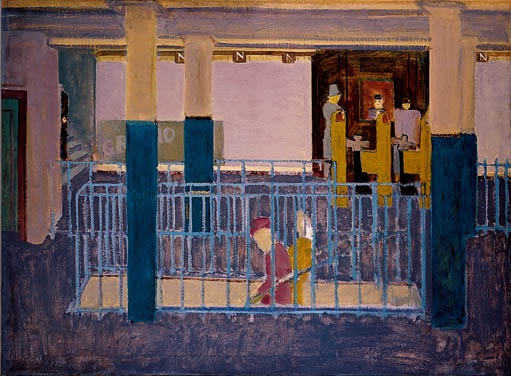
His Subway scenecs was a painting he did;
completed in the late 1930s.

Jackson polluk and other artists

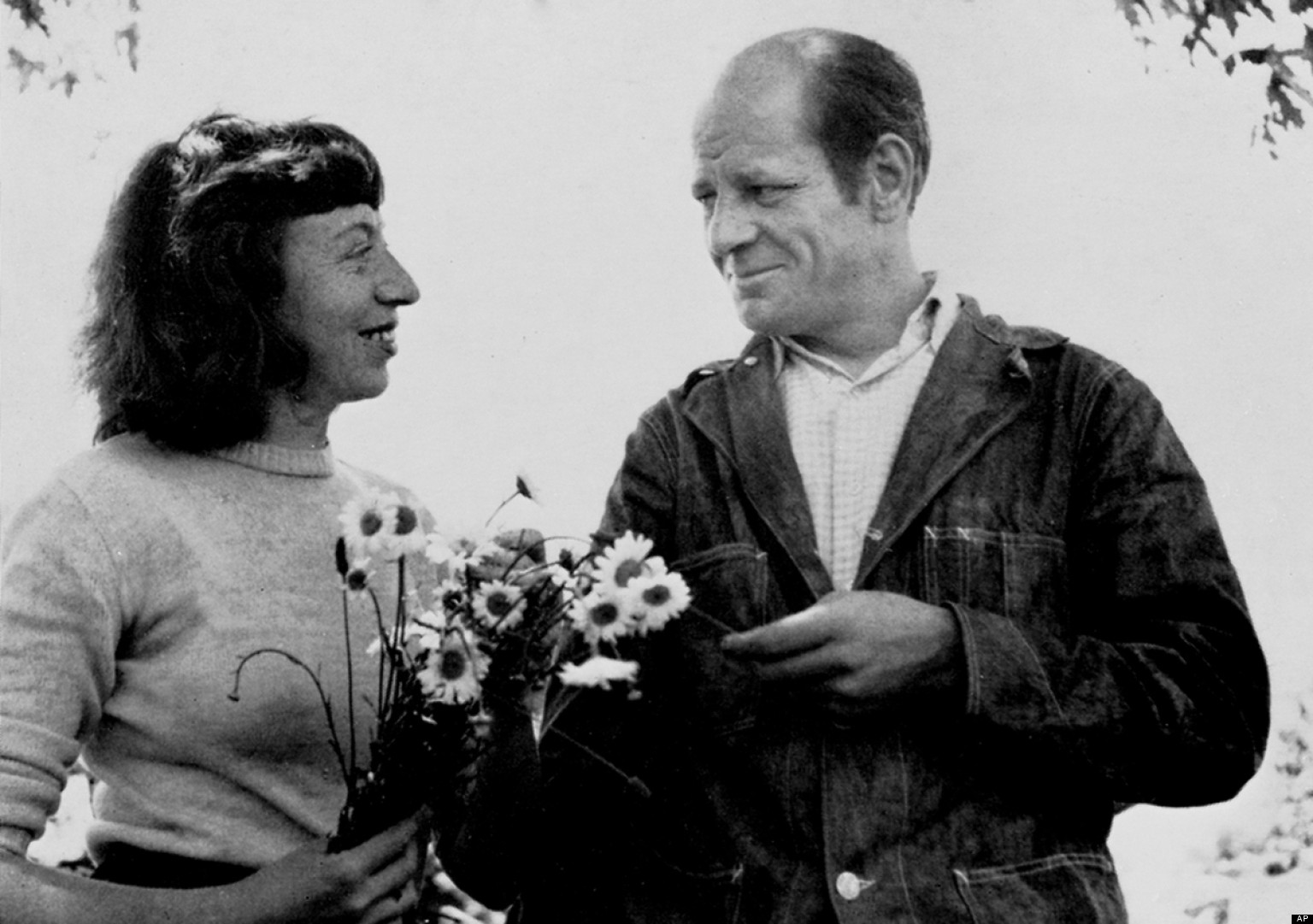
Paul Jackson Pollock, known professionally as Jackson Pollock, was an influential American painter and a major figure in the abstract expressionist movement. He was well known for his unique style of drip painting.
he had a volatile personality, and struggled with alcoholism for most of his life


Pollock signed a gallery contract with Peggy Guggenheim in July 1943. He received the commission to create Mural (1943), which measures roughly 8 feet tall by 20 feet long,[14] for the entry to her new townhouse.
my painting does not come from the easel. I prefer to tack the unstretched canvas to the hard wall or the floor. I need the resistance of a hard surface. On the floor I am more at ease. I feel nearer, more part of the painting, since this way I can walk around it, work from the four sides and literally be in the painting.
I continue to get further away from the usual painter's tools such as easel, palette, brushes, etc. I prefer sticks, trowels, knives and dripping fluid paint or a heavy impasto with sand, broken glass or other foreign matter added.
When I am in my painting, I'm not aware of what I'm doing. It is only after a sort of 'get acquainted' period that I see what I have been about. I have no fear of making changes, destroying the image, etc., because the painting has a life of its own. I try to let it come through. It is only when I lose contact with the painting that the result is a mess. Otherwise there is pure harmony, an easy give and take, and the painting comes out well.
—Jackson Pollock, My Painting  1956
some of jacksons work include:
(wide walls)
(Number 8)


Franz Kine:
ranz Kline was born and raised in Wilkes-Barre, Pennsylvania, a small coal-mining community that offered few opportunities for artistic development. His childhood was marred by a complicated relationship with his parents. His father, a saloon keeper, committed suicide in 1917, when Kline was only seven years old. His mother later remarried and sent her son to an institution for fatherless boys, which the artist referred to as "the orphanage."

American Abstract Expressionist Franz Kline is best known for large black and white paintings bearing abstract motifs set down with strident confidence. By the end of his life he had achieved immense international recognition, and his unusual approach to gestural abstraction was beginning to influence the ideas of many Minimalists.The powerful forms of his motifs, and their impression of velocity, were intended to translate into an experience of structure and presence which the viewer could almost palpably feel.


Thursday, 3 December 2015

Bob

Roberta Smith is a art critic.Se had a job at the museum at art
His dad went to art school who was later blown up and died quite a young man. His dad said make art not war and this inspired a pierce.
He speaks of donald Judd and says his art has been mortgaged to his family and his art is glossy on boards and the fact he's a art man. He likes the idea that they can be a formal thing and the font is a adwordian and the colours are modern and they are at odds with the history.he'd like the audience that children would think certain things and language and how we speak to each other. He says that politics always rap up their words in a certain way and that we should not take language for granted.

Thursday, 26 November 2015

displacement and degenerate art

Books,writers,and artist were attack.1937 held up the art the hated 30000 went to it and laughed.
Many artists flees and other killed themselves.The nazis called it modern artist were degenerate.
The art scared the nazis and they wanted to control it.back then hitler was rejected by the college and he thought that only true art was the one that represented the world. He painted and sold post cards to make money.This put towards his hate of the art.expressionism art was made to go beyond figures and used violent colours.people reacted badly to it as it was considered mad (kukoskas work).1914 young Germans fought.kukoska went mad and even sketched a wound he was going to have and soon got.the effects of war got to all.Adolf found happiness in the war until german surrendered and he became unhappy soon going into politics.Germany was in chaos and Hitler made the National socialist party.in 1924 emerged from a prison for trying to over through German politics he blamed all that had made him suffer calling them jews and degenerate (central aspect with symptoms).In Berlin modern artist florist.Few people cared about Hitler's idea and Berlin became the capital of the art world.Max beckman was praised as a true German and artist but was transformed as of the war and was discharged.1920 Beckman was still haunted by the war.1929 broke the german country's back and 50,000 people lost jobs people felt betrayed and Jews along with others were blamed (they were called a sickness).1933 German parliament deadlocks and Hitler is appointed Minster (?)books were soon burned in fires made by the Nazis.Carl marks and eimstein we're just some whos books were burnt.people Tryed to hide there views in fear or were taken to camps.bauhouse was closed by the nazis and others fired.
films were effect and band and abstraction was forbidden.Classics were not permitted.All forms of modern music was attacked and band.Streams of propaganda were everywhere.1000s of Marchs celebrated the years of German culture.1937 the house of German art open and selected by hilter who said it was German art(which was for sale).'Racially pure women and men' people spoke.Art there was quite macho and nudes which were many.
People said it was close to the pornographic.art was subjective to women and sexist either showing women naked or as mothers.People found this attractive as it held up paintings that were not considered good.The nazi war against work came to a close and many were stolen.they were told these pictures were sick.
112 artist we're singled out as degenecente.Artist the nazis didn't like we're going to be llquidated.
The death of Art in Germany great work was being mocked.renaming art work.June 1938 committed suicide
(Ludvick kurkner).he destroyed his own work.omeali noldver the nazis put the cop to follow him so he couldn't paint and people could smell the oil.van gosh,mertis etc paintings were all sold.Everyear Hitler had a new expedition and he would buy a lot of work (264 were bought one year).1933 tomis mon great writer fled Germany saying that there are not two Germans one being good and bad and no one can say they are good or bad.
Expressionism-Considered themselves the mentally ill in the world of art.
National socialism were the opposite of politics.
Every year there was a exerbition of hitlers favourite work.

Ai Weiwei(artists and movie)
Activist.Art critics against them.Police storm how studio and arrest him.Some of his work shows this.walks around London carrying a blanket with another artist.he sometimes promotes himself in diffrent way.Ai weiwei talks about his work at the royal academy saying he feels such a fascinating character with the chess player saying he is admirable.his work he says he has very little knowledge and he was contemporary he likes disot Paul.he loves warhol axcisty as a modern man.he says he has been victimized by the political struggle he says he trays to escape from that.if. He has strong opinion he says he will express it this he speaks of is his job.
One of the exhibition pieces were pots that had be dipped in paint.Some had companies painted on them like coca-cola and such. Another part was the series of three pictures that had him dropping a historical pot.this was supposed to symbolize that he loved the culture but he wanted something new.
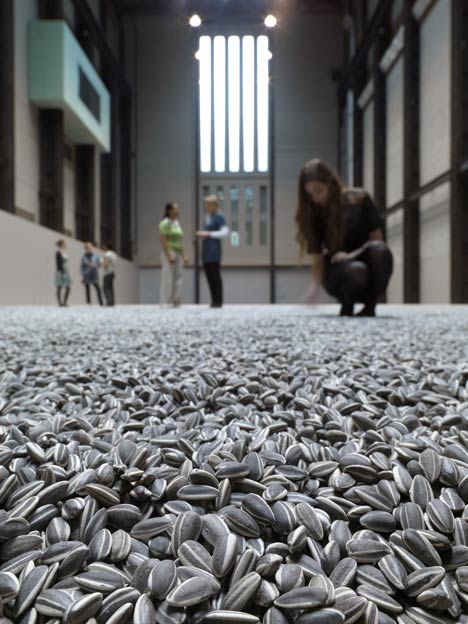
He says he would have no regrets being in prison if he spoke his mind.He says he was heavenly monitored and had his health checked a lot.h says in art you have to transform your feeling into something that can tell a story to another and you can not fore some one to feel the same way as you. But you have a responsibility to make sure your language is clear.Sunflower seeds work to search talking about you are walking on the population people would Lay on them but caused a risk because of the dust.Some were picked up.They were made from different factors.porcelain is the pinical material of clay and is expensive.Seramics is basically mud.he chooses porcelain because of the way it is thought to be expensive marital and how the people who uses it pretty mush work with mud.His place is called Tofu as in the food
The making of straight:
70,000 were killed in the earth quake.children were killed as well.
He had six or seven days he didn't write anything due to feeling speechless and people questioned it.He went to feel reverent and stood in one of the earthquake and spoke about the bodies under his knees.He wanted to find out who's dead ans he saw pack backs.they sent out groups to find out who they were and 40 groups got arrested.He put all the names on his blog y saying who they were,how old they were etc.he did a mural for a mum that lost her dancer child using back packs in the picture.He was soon arrested in 81 days(for tax evasions)  and he came back to his staff still working even then which gave him joy.theses worked on pipes.he's done conditions for the bejing stadium (the birds nest).
 
This personally is my favourite work by Ai with the pots. His pictures and work have been renowneded and at one time a protester smashed one of his 1m pots.

Thursday, 19 November 2015

Bauhaus

Notes;
The Bauhaus was first founded by Walter Gropius in Weimar. In spite of its name, and the fact that its founder was an architect, the Bauhaus during the first years of its existence did not have an architecture department. Nonetheless, it was founded with the idea of creating a "total" work of art in which all arts, including architecture, would eventually be brought together. The Bauhaus style later became one of the most influential currents in modern design, Modernist architecture and art, design and architectural education.The Bauhaus had a profound influence upon subsequent developments in art, architecture, graphic design, interior design, industrial design, and typography.

he "Degenerate Art" exhibit held in Munich in 1937 was the end of modern art in Nazi Germany and the beginning of Nazi Art. The author examines some of the art shown at that exhibit.
Barr, the director of the Museum of Modern Art from its inception in 1928 until 1943, displayed "almost prophetic insight" on his visit to Stuttgart at the very beginning of Nazi rule in 1933. In Stuttgart, Barr found that The "Battle Band for German Culture", an early official Nazi group with affiliates in every important German city, dominated almost every phase of German cultural life right from the beginning of the Nazi regime. He also found that modern art, offensive to the Third Reich, was attacked in Stuttgart, a city which had embraced the modern International Style in art and architecture - a reasonable attachment since the International Style was German in origin.
Wassily Kandinsky
A member of the German Expressionist group Der Blaue Reiter, and later a teacher at the Bauhaus, Kandinsky is best known for his pioneering breakthrough into expressive abstraction in 1913. His work prefigures that of the American Abstract Expressionists.
Josef Albers
Josef Albers was a German-born American painter and teacher. Celebrated as a geometric abstractionist and influential instructor at Black Mountain College, Albers directly influenced such artists as Robert Rauschenberg, Cy Twombly and Ray Johnson.
Laszlo Moholy-Nagy
Laszlo Moholy-Nagy was a Hungarian painter, photographer and teacher at the Bauhaus School. Moholy-Nagy was influential in promoting the Bauhaus's multi- and mixed-media approaches to art, advocating for the integration of technological and industrial design elements.
Ludwig Mies van der Rohe
Ludwig Mies van der Rohe was one of the founding fathers of architectural Modernism. Utilizing modern materials and mass production strategies, his buildings rejected surface ornament in favor of a sleek and imposing geometry.
Johannes Itten (11 November 1888 – 25 March 1967) was a Swiss expressionist painter, designer, teacher, writer and theorist associated with the Bauhaus (Staatliche Bauhaus) school. Together with German-American painter Lyonel Feininger and German sculptor Gerhard Marcks, under the direction of German architect Walter Gropius, Itten was part of the core of the Weimar Bauhaus.
Oskar Schlemmer (4 September 1888 – 13 April 1943) was a German paintersculptordesigner and choreographer associated with the Bauhaus school. In 1923 he was hired as Master of Form at the Bauhaus theatre workshop, after working some time at the workshop of sculpture. His most famous work is "Triadisches Ballett," in which the actors are transfigured from the normal to geometrical shapes. Also in Slat Dance and Treppenwitz, the performers' costumes make them into living sculpture, as if part of the scenery.chlemmer became known internationally with the première of his 'Triadisches Ballett' in Stuttgart in 1922. His work for the Bauhaus and his preoccupation with the theatre are an important factor in his work, which deals mainly with the problematic of the figure in space. People, typically stylised faceless female figures, continued to be the predominant subject in his painting. While at Bauhaus, he developed the multidisciplinary course "Der Mensch (The human being)." In the human form he saw a measure that could provide a foothold in the disunity of his time. After using Cubism as a springboard for his structural studies, Schlemmer's work became intrigued with the possibilities of figures and their relationship to the space around them, for example 'Egocentric Space Lines' (1924). Schlemmer's characteristic forms can be seen in his sculptures as well as his paintings. Yet he also turned his attention to stage design, first getting involved with this in 1929, executing settings for the opera 'Nightingale' and the ballet 'Renard' by Igor Stravinsky.

Bauhaus
House mad be bauhaus worksop.was made as a dream about a better world.Also made affordable.Designed a kitchen using ceramics and glasses as well.1923 hyperflation stopped the houses being sold in mass and jobs started to loss.At this time Nazis marched through the streets protesting.Soon after the college closed 1925 due to this (national social party which where Nazis).1924 political arts had the depression and prohibited money to try compensate for the devalue.was closed before it could be closed(reopened destroying desseou) which was better a more natural home less then a year to build.designed things for workshops metal replaced wood,chairs were inspired by cars and such.experiments were made with double montage and over printing.bold simple designs rethought ht along with text and everything was possible.Dixeland
They were seen as Punks.

Second director.Second director communist Hannes Meyer's took the place of groupeus 1929.1930 Ludwig was appointed as the next Bauhaus director.actetictual study's were topped and was closed as nazis thought it to be a pit of Jewish ideas.

Georg Muche

nvited Muche in 1919 to join the Bauhaus faculty in Weimar.At Bauhaus, he headed the weaving workshop from 1919 to 1925 and directed the preliminary course from 1921 to 1922.Muche was in charge of the 1923 Bauhaus Exhibition, their first major exhibition,[5] for which he designed an experimental house known as "Haus am Horn". It was constructed in 1923 as the first practical implementation of the new Bauhaus building style. Such principles were key influences on 20th-century architecture.Of the original Bauhaus buildings in Weimar, Haus am Horn is the only one still standing.[8] Muche was the leading proponent of the Bauhaus architectural group. In 1926 he, along with Richard Paulick, designed the innovative Stahlhaus (Steel House) at Dessau-Törten.[5][7] From 1925 to 1927 he headed the Bauhaus' weaving workshop in Dessau.

Gunta Stölzl (5 March 1897 – 22 April 1983) was a German textile artist who played a fundamental role in the development of the Bauhaus school’s weaving workshop. As the Bauhaus’s only female master she created enormous change within the weaving department as it transitioned from individual pictorial works to modern industrial designs. She joined the Bauhaus as a student in 1920, became a junior master in 1927 and a full master the next year. She was dismissed for political reasons in 1931, two years before the Bauhaus closed under pressure from the Nazis.She soon became a mentor to other students and reopened the Bauhaus dye studios in 1921. After a brief departure, Stölzl became the school's weaving director in 1925 when it relocated from Weimar to Dessau and expanded the department to increase its weaving and dyeing facilities. She applied ideas from modern art to weaving, experimented with synthetic materials, and improved the department's technical instruction to include courses in mathematics. The Bauhaus weaving workshop became one of its most successful facilities under her direction.